
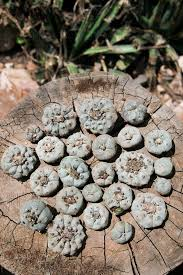
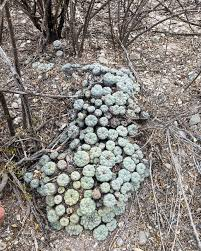
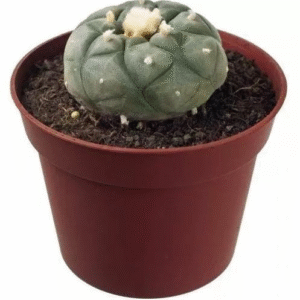
“Dry” Peyote or “False” Peyote – Lophophora diffusa – is so-named because it is extremely low in mescaline, the psychoactive alkaloid that makes its sister species – Lophophora williamsii – such a coveted and sadly poached item.
Though this species may not contain anything but trace amounts of mescaline, being a spineless cactus it has no doubt evolved an alkaloid profile that would be enough to make any rabbit barf, if not drop into seizures or temporary paralysis from the high amounts of other alkaloids like pellotine, anhalonine, anhalonidine, and lophophorine. What’s more, most of these alkaloids including mescaline are biosynthesized in quite a few species of small cacti in the Cactoideae subfamily, at least in trace amounts. It makes sense – if you’re cutting caloric costs in terms of spine production but you still grow in an arid region where herbivore intensity can be high since the figurar cupboard is somewhat bare, you better be putting that energy into producing some strange and nasty chemicals (mainly alkaloids, of course).
I always say that the LEAST interesting thing about Peyote (including all 4 currently known species in the genus) is that it’s psychoactive. Way more interesting is how tough these little plants are to be able to grow in such extreme habitats (AND WITHOUT SPINES!), their subterranean storage stems, and the laundry list of chemicals they produce.
I’m much more familiar with Lophophora williamsii – True Peyote – since I live in its native habitat. It was extremely cool to become familiar with another “variation” on the theme of this species that likely diverged from the species I already know a million or two years ago. The flowers on diffusa are white, not pink, & the stigma is a bit more exserted than the stigma in flowers of L. williamsii. Reportedly, however, the pollinators are much the same : solitary bees & the tiny beetle Acmaeodera.
I also love how this cactus looks like a St. Patrick’s Day Donut somebody left on the driver seat of their 1996 Honda Civic and accidentally sat on.
To read more, check out Chan, et al. (2021) The Alkaloids from Lophophora diffusa and Other “False Peyotes” and go get it on sci-hub.
 No products in the cart.

Reviews
There are no reviews yet.